For a practical weekend in Chicago, give the first day to the downtown river-and-lake setting and the second to one museum or neighborhood you genuinely want to understand. That division keeps the trip recognizable without turning it into a competition to see everything.
Chicago rewards looking closely: at the buildings around the river, the relationship between the Loop and the lakefront, and the change in atmosphere beyond downtown. This itinerary uses those contrasts as its structure. It is a flexible planning model, not a set of guaranteed travel times, opening hours, or reservations.
Before arrival: build the weekend around your base
Choose accommodation by the journeys you will actually make. A downtown base can simplify a first visit focused on the Riverwalk, Millennium Park, and a major museum. A neighborhood base can suit a repeat visitor or someone whose main interest is food, a performance, or spending time outside the central sightseeing circuit.
Map your arrival, the route to the hotel, and your departure separately. Chicago has more than one airport, so an instruction that works for one arrival point should not be copied to another. The CTA’s official information is the starting point for rail and bus planning; check the service notices that apply to your dates.
Book the experiences that would disappoint you to miss, then leave the remaining periods open. One museum reservation and one evening event are easier to accommodate than a full series of timed entries. If you arrive late, prioritize checking in and eating nearby rather than treating the first night as a lost sightseeing opportunity.
Official references: Chicago Transit Authority — Travel Information
Saturday morning: read the city from the river
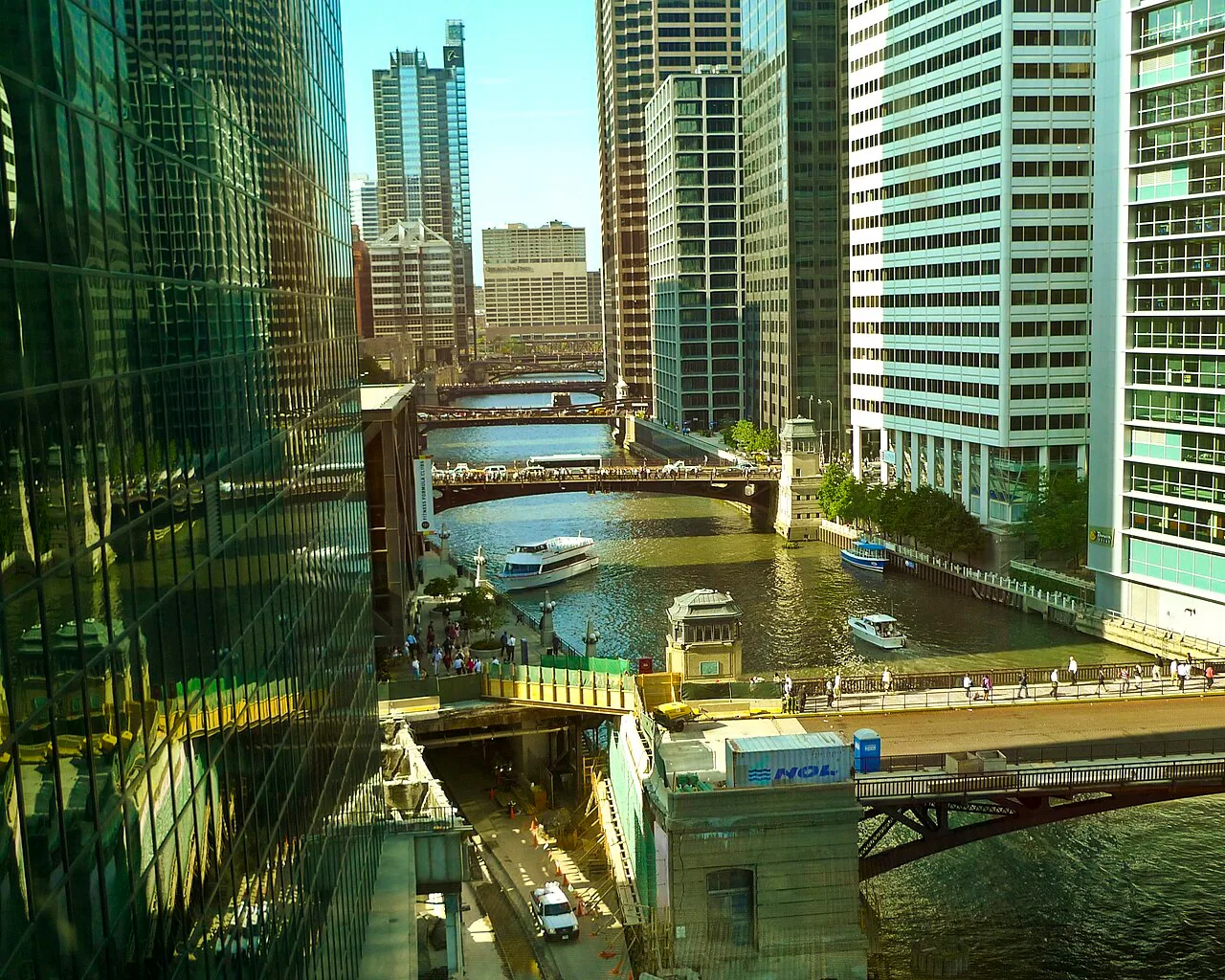
Start with the Chicago Riverwalk and the surrounding streets. The Riverwalk follows the downtown river on its south bank, putting you below street level with views into the architectural corridor. Rather than walking continuously while checking a list, pause and compare how older buildings and newer towers relate to the water.
Choose either a self-directed introduction or an architecture cruise that matches your interests. A cruise can add context, but it is a separate booking decision with an operator, departure point, and current availability to check. Do not assume every boat tour has the same focus, accessibility arrangements, or seasonal operation.
If you take a cruise, keep the rest of the morning light. If you prefer to stay on land, combine a Riverwalk segment with a few street-level views. You do not need both a lengthy walk and every available architecture experience to feel you have used the morning well.
Official references: Choose Chicago — Chicago Riverwalk · Choose Chicago — Two Chicago Waterfronts
Saturday afternoon: connect the Loop with the lakefront
After lunch, turn toward Millennium Park and the lakefront side of downtown. This creates a useful contrast with the river: a different scale of public space, a wider horizon, and a chance to see how the city meets Lake Michigan. Choose a route with a clear endpoint rather than drifting farther simply because the waterfront continues.
You can make the Art Institute the principal afternoon stop if art is one of your priorities. In that case, shorten the outdoor portion and allow enough time to focus on a few collections. A major museum is not best experienced as a rushed box between two other commitments. Check its own visitor information for tickets and current access.
Alternatively, keep the afternoon outdoors and save a museum for Sunday. Chicago’s weather and daylight should shape that choice. A lakefront walk that feels appealing in one season can be a poor fit for another. Retaining an indoor alternative is more useful than promising yourself a fixed route regardless of conditions.
Official references: Choose Chicago — Two Chicago Waterfronts · Art Institute of Chicago — Official Admissions
Saturday evening: choose one food or performance focus
Give the evening its own identity. You might choose dinner in a neighborhood you want to explore, a music performance, theater, or a low-key meal near the hotel. If the restaurant is the main event, avoid scheduling a tightly timed show afterward. If the performance matters most, choose dinner by proximity and predictability.
Chicago’s food identity should be a starting point for curiosity rather than a checklist of dishes you must consume in a single weekend. Read menus, consider dietary needs, and decide which experience interests the people actually traveling. A long queue is only worthwhile if that specific meal matters to you.
Before leaving, confirm the return journey and the address of the venue entrance. Groups should agree on how late they want to stay out. Ending the evening comfortably can be more valuable than adding another stop simply because the itinerary labels the period nightlife. You still have a full second day to enjoy.
Sunday morning: choose a museum or one neighborhood
Sunday is the opportunity to make the trip more personal. If you skipped a museum on Saturday, use this morning for it. If you have already had your fill of central sights, select one neighborhood and explore it with a specific interest in mind: architecture, local shops, a particular cultural institution, or a meal.
Lincoln Park, Pilsen, and Hyde Park represent very different outings. They should be alternatives, not a single morning route. Look at the relevant neighborhood information and actual transport connections before choosing. You will get more from one area if you can spend time there than from a string of brief arrivals across the city.
Find one anchor for the visit, such as a museum booking or a clearly chosen commercial street, then allow room around it. Respect the distinction between a public place and a residential setting. A neighborhood is a living community, so photographs, noise, and access should follow ordinary consideration rather than a tourist entitlement.
Official references: Choose Chicago — Neighborhoods
Sunday afternoon: protect your departure window
Build the final afternoon backward from the journey home. Include collecting luggage, reaching the station or airport, and any requirement imposed by the transport provider. Do not place a distant attraction in the remaining gap merely because its advertised visit duration appears to fit.
Choose a final activity that can shrink gracefully: lunch, a short park visit, or a nearby walk. That is more practical than a timed admission that becomes stressful if the morning runs late. If your accommodation holds luggage, confirm the arrangement instead of assuming it is available.
For an evening departure, you may have room for a second substantial outing, but keep it in the same broad area as your remaining logistics. The last hours of a city weekend often become its most memorable when they are calm. A good final meal and an easy journey can be a better ending than squeezing in another headline sight.
Use a simple priority budget for both time and money
Imagine two first-time visitors with one expensive experience each on their wish lists: one wants an architecture cruise and the other a major art museum. A sensible plan puts the cruise in Saturday’s first half and gives the museum an unhurried block on Sunday. Park and neighborhood time fills the remaining space rather than competing with those bookings.
This hypothetical pair might decide against an observation deck because it would add another paid, timed attraction with some overlap in its purpose. That is a planning tradeoff, not a claim that the attraction lacks value. Another traveler who loves skyline photography could make the opposite decision and shorten the museum visit.
The same principle works with meals. Choose where a reservation or a particular experience is worth paying for, and keep other meals flexible. Compare actual current prices with the provider before booking. A weekend budget is easier to control when you know which purchases matter most rather than treating every advertised bundle as a saving.
Adjust for weather, mobility, and energy
Do not save every outdoor experience for one narrow period. If Saturday is more comfortable for walking, use it for the river and lakefront; move an indoor visit to the less favorable day. The route should serve the weekend, not the other way around.
Check the access route as carefully as the attraction itself. River-level paths, station entrances, museum doors, and street crossings can change the practical experience for someone using a wheelchair, walking aid, or stroller. An itinerary that works on a map may need a different entrance or connection.
Keep at least one genuine rest period. Sitting down over lunch, returning to the hotel, or shortening a waterfront segment is not wasted time. Chicago’s scale can tempt visitors into spending more energy on movement than on the experiences they came for.
Three mistakes that make a Chicago weekend harder
First, avoid combining several far-apart neighborhoods in a single afternoon. The journey between them can become the main activity. Second, do not interpret a museum’s size as a requirement to see every room. Pick a few priorities and enjoy them properly.
Third, verify the final connection for evening plans rather than looking only at the outbound journey. Construction, events, seasonal services, and your arrival or departure point can alter what is practical. Use official transport and venue information for decisions that depend on current operation.
When reviewing your final plan, remove one optional stop. Keep it as a bonus if the weekend unfolds easily. A little spare time is what allows a practical itinerary to feel like a break rather than an assignment.
Frequently asked questions
Is two days enough for Chicago?
Two full days can provide a satisfying introduction if you focus on the central waterfront setting and one additional personal interest. They are not enough to cover every major museum and neighborhood. Prioritize a coherent visit instead of trying to reproduce a week-long itinerary.
Should I book an architecture cruise in advance?
If a particular operator or departure is important, check availability and booking terms before traveling. Verify the departure point and access requirements directly. Keep an alternative river-level walk in mind for a plan disrupted by weather or an unavailable sailing.
Do I need a car for this itinerary?
The central portions are intended to work with walking and suitable public transport. Neighborhood choices and your accommodation determine the remaining journeys. Research door-to-door connections before deciding; a rental car is not automatically helpful for a downtown-focused weekend.
Sources & further reading
- Chicago Transit Authority — Travel Information ↗
- Choose Chicago — Chicago Riverwalk ↗
- Choose Chicago — Two Chicago Waterfronts ↗
- Art Institute of Chicago — Official Admissions ↗
- Choose Chicago — Neighborhoods ↗
Source review: October 22, 2026. Opening arrangements, prices, access, and services can change; confirm current details with the responsible operator.
Editorial note
This guide is an editorial synthesis of referenced information and practical planning advice. It does not claim first-hand visits or live operator information. Hypothetical examples are identified in the text.
How we review content · Suggest a correction
Back to City Guides